

The Enneagram
A powerful system for insight and impact
WHAT IS THE ENNEAGRAM?
Nine Types.
One Dynamic System.
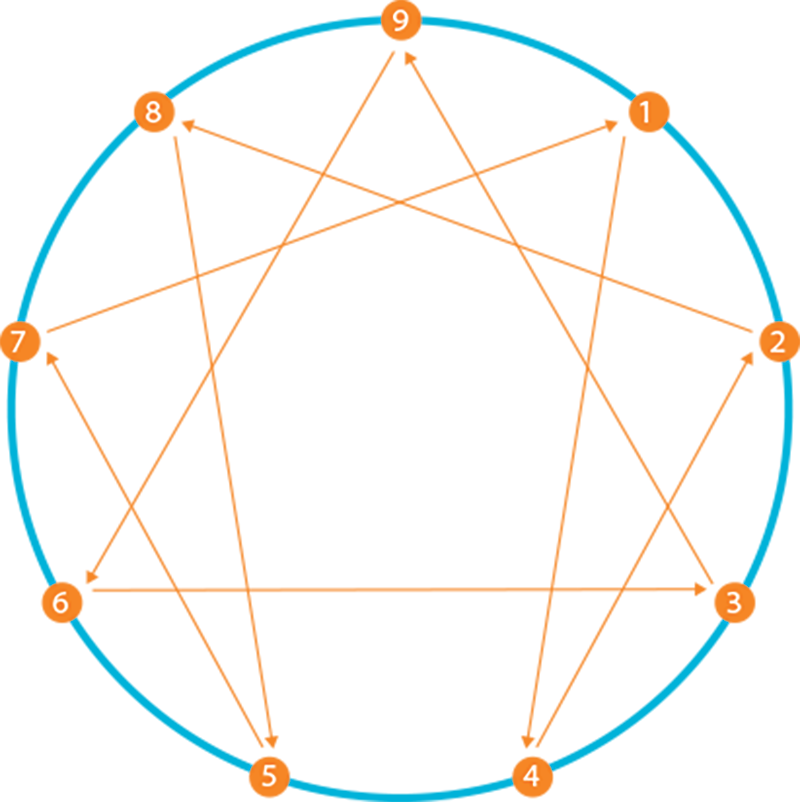
The Enneagram is an archetypal system with nine distinct personality styles or “types” that reveal how we see the world and how we’re motivated to be in it.
Understanding our type - and other’s types - is like having a secret decoder ring for why we do the things we do.
We can use this understanding to build healthier relationships, communicate more effectively, and work better together.
“There’s the map of the territory and then there’s the map that shows you how you draw maps. That’s the Enneagram"
The Enneagram is…
Dynamic: Reveals our “home base” type and how we can access all other types.
Relational: Acts a lens to see the relationship we have with ourselves, others, and the world.
Non-Judgmental: Provides a neutral language to describe our experience and others’ as well.
HOW WE USE IT
The Enneagram for Individuals and Teams
We use the Enneagram in two primary contexts - with individuals and teams. Each builds on the same foundation, and both deepen presence and awareness that help people expand their presence and impact.
THE NINE TYPES
Each type is a strategy for navigating the world.
Think of personality as a strategy developed early on to help us make sense of and be in the world. This strategy emerges in what we feel, how we think, and how we behave. The Enneagram helps us see these patterns clearly — not to change our personality, but to give us a chance to think, feel, and do things differently in different situations.

TYPE 8 / Body Center
The Protector
Motivated to protect self and others from injustice. Direct, powerful. Gifts: strength and advocacy. More→
TYPE 9 / Body Center
The Peacemaker
Motivated to create harmony, inner and outer. Accepting, steady, unifying. Gifts: inclusion and presence. More→


TYPE 1 / Body Center
The Improver
Motivated to reform and improve. Principled, purposeful, discerning. Gifts: integrity and high standards. More→
TYPE 2 / Heart Center
The Giver
Motivated to meet the needs of others. Warm, attuned, relational. Gifts: deep care and emotional presence. More→


TYPE 3 / Heart Center
The Performer
Motivated to achieve and be seen as valuable. Focused, adaptable, driven. Gifts: achievement and inspiration. More→
TYPE 4 / Heart Center
The Individualist
Motivated to be authentic and deeply known. Creative, expressive, emotionally rich. Gifts: depth and originality. More→


TYPE 5 / Head Center
The Observer
Motivated to acquire knowledge, conserve resources. Perceptive and independent. Gifts: clarity and insight. More→
TYPE 6 / Head Center
The Questioner
Motivated by safety and preparedness. Alert, loyal, questioning. Gifts: foresight and fierce commitment. More→


TYPE 7 / Head Center
The Enthusiast
Motivated by freedom from pain & limitations. Visionary, joyful, generative. Gifts: possibility and energetic. More→
A few things to keep in mind as you explore the Enneagram: 1) You are not your personality or type - it’s a part of you, not the other way around; 2) We have better access to all types as we grow our self-awareness; and 3) We all have a “home base” type that is our default strategy for navigating the world.
THE CENTERS OF INTELLIGENCE
Body. Heart. Head.
Three ways of knowing.
The nine types are organized into three Centers of Intelligence — the foundational architecture of the Enneagram. Each center represents a distinct way of making sense of the world. We use all three, but we tend to rely heavily on one, usually the one where our “home base” type lives.
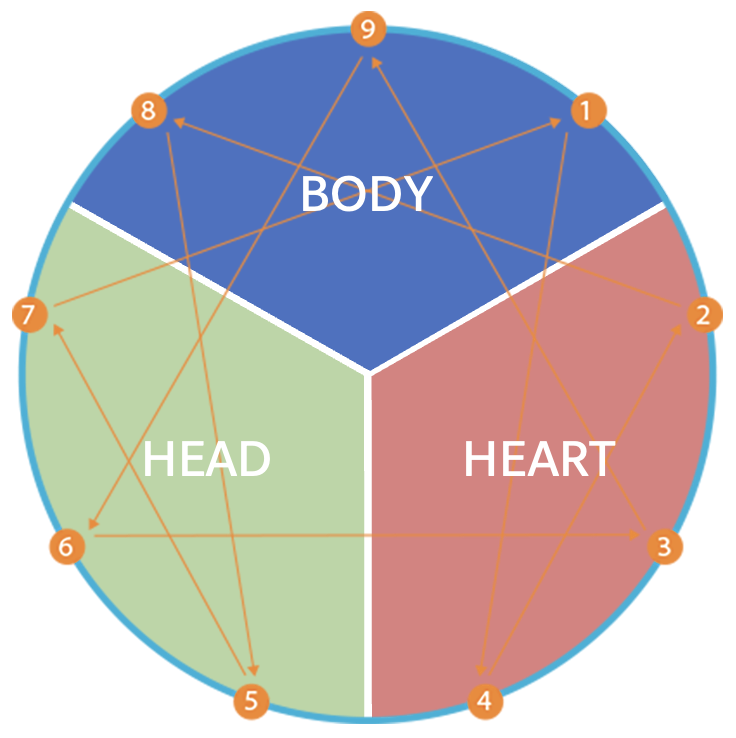
Body Center of Intelligence
Types 8, 9 & 1 · Lead with Instincts
Kinesthetic knowing through gut instinct, physical sensation, and a keen sense of right and wrong. When out of balance, issues around anger can arise.
Heart Center of Intelligence
Types 2, 3 & 4 · Lead with Emotions
Perceptive, attuned knowing through emotion, image, and connection. When out of balance, issues around grief and shame can arise.
Head Center of Intelligence
Types 5, 6 & 7 · Lead with Intellect
Clarity, foresight, and pattern recognition through analysis and planning. When out of balance, issues around fear and anxiety can arise.
What combination of Instinctive, Emotional, or Intellectual intelligence serves you best? Chances are you use a different mix of all three depending on the situation and who you’re with. That’s and example of the dynamic nature of the Enneagram system.
WHERE TO GO NEXT
Ready to Go Deeper?
There are a few ways to bring the Enneagram into your work — depending on where you're starting from.
Get the Free Guide
Download "Nine Paths to Presence" — a guide for people who coach on presence, the Centers, and the Enneagram.

Work with Mo + Cai
Let’s discover your “home base” Enneagram type, leverage your best qualities, or become agile at using it with/for others.

Join InsightOut
Become a member of our Enneagram coach community and get tools, resources, workshops, and peer connection.

There’s so much more to explore! Feel free to contact us with any questions.